
Day 203
2 Chronicles 25–26 | Matthew 19 | Proverbs 17
⸻
I’m an encourager.
It’s how God made me.
My study Bible says the Greek word for it is paraklesis—comfort, exhortation, counsel.
I don’t just enjoy building others up. I need to. It grounds me. Gives me purpose. Reminds me who I am and what matters.
And there’s nothing like putting it in writing.
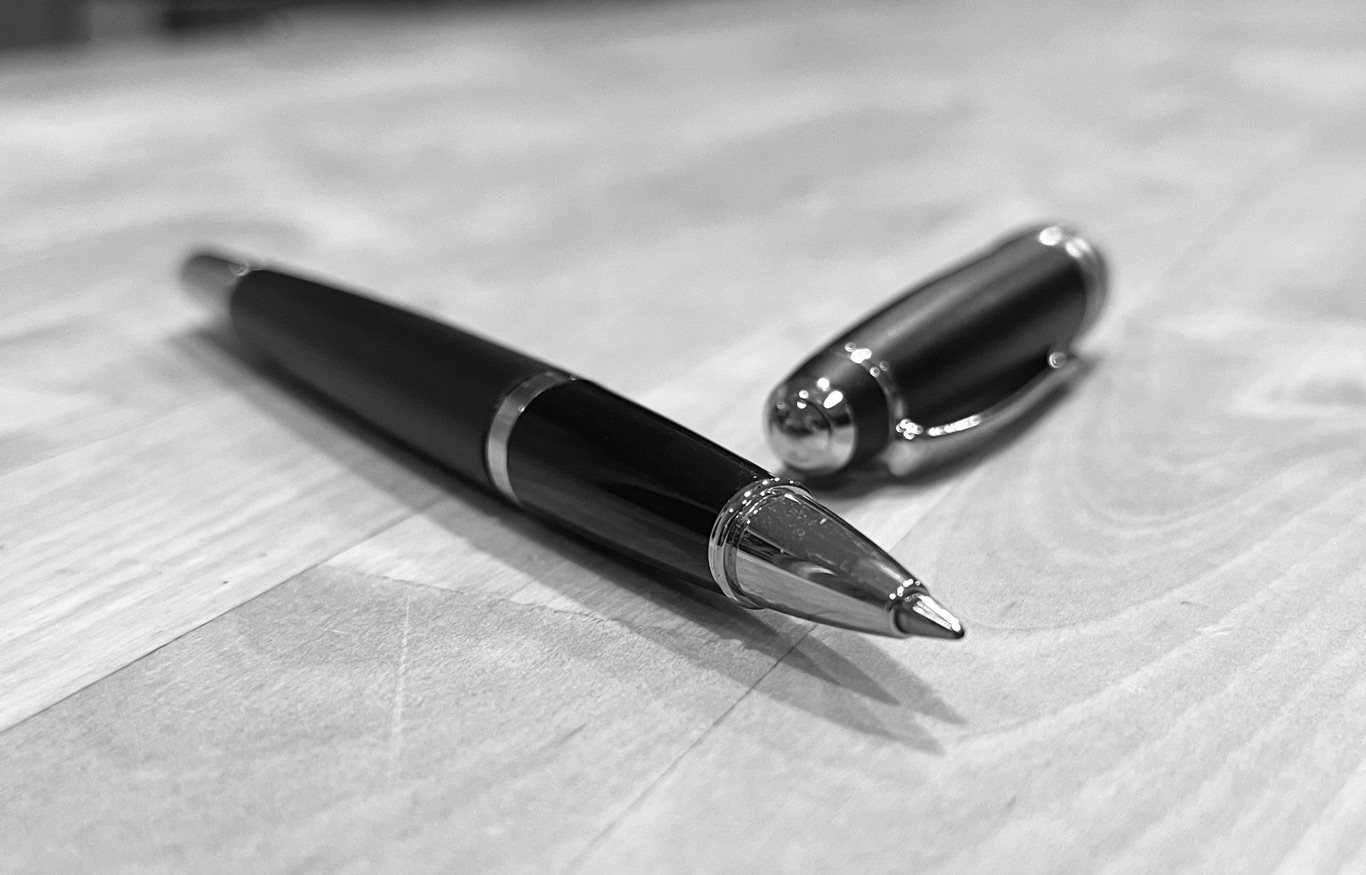
I’ve used the same pen for years—a black lacquer Cross Townsend with polished chrome trim and a broad-point rollerball tip. It’s the same model every U.S. president since Reagan has used to sign bills and write history.
I may never sit behind the Resolute Desk, but when I uncap that barrel and feel the weight of it in my hand, something shifts. I become more focused. More present. More intentional.
That’s the moment I love.
Seeing something in someone, and naming it.
Giving encouragement that outlasts the conversation.
But since the saw tore through my writing hand nine months ago, those moments have been fewer and farther between. I just can’t grip the pen like I used to. And when I try, I feel both the strength I’ve lost—and the scars I will always carry.
Sure, I can type with my thumbs. But it’s not the same.
I miss feeling the ink press into the page—miss how the pen steadied my hand, and how the words steadied my heart.
And oddly enough, that physical ache mirrors something deeper—because as much as I love encouraging others, I still haven’t learned how to receive it myself.
The Compliment I Couldn’t Take
Jason and I were texting back and forth last night. (I know this is the first time I’ve mentioned him in a while—but he’s still around and he’s still Jason: wise, steady, annoyingly perceptive.)
He said something deeply kind. Something generous and true and undeserved.
And I brushed it off.
Again.
So he replied: “I’m going to stop giving you compliments. You always come up with an excuse to discredit yourself.”
He’s right.
I do.
Because somewhere along the way, I started treating encouragement like flattery.
As if it were a threat to humility.
As if I had to swat it away to stay grounded.
But that’s not humility.
That’s pride in disguise.
And the one person who called it out?
Jason—who’s been in my corner for years, even when I’ve tried to push him out of it.
The King Who Couldn’t Stay Small
Uzziah started well.
He sought the Lord.
He was taught, mentored, guided.
He built armies, cities, towers. He was marvelously helped, Scripture says, “until he was strong” (2 Chronicles 26:15).
But that strength became his undoing.
He entered the temple.
Claimed what wasn’t his.
And when confronted by faithful priests, he burned with anger—until God struck him with leprosy.
Pride took what started in dependence and twisted it into entitlement.
He didn’t just forget who gave him strength.
He rejected anyone who dared remind him.
I read that—and I wonder:
What do I do with the strength God’s given me?
Do I use it to encourage—or defend?
To bless—or deflect?
The Pen That Still Waits
I miss writing notes with my Cross pen.
But maybe what God’s really doing is writing something in me before He lets me write through me again.
Because it’s not just my hand that’s healing.
It’s my heart.
I’ve learned that pride doesn’t always look loud.
Sometimes it looks like refusal.
Refusal to believe God’s grace is really that generous.
Refusal to believe your friend means it when he says something good about you.
Refusal to let encouragement land because you’re afraid it might inflate you.
But grace doesn’t inflate.
It remakes.
Jason’s comment in that text message was more than a critique.
It was a hand on my shoulder—steady and weighty and clear, like that pen used to be in my grip.
He wasn’t just calling out my reaction.
He was calling me back to the truth.
The truth that everything good in me is from God.
That strength isn’t the problem—forgetting where it comes from is.
And that healing is both a process and a promise.
⸻
Lord, I want to encourage others without needing control. I want to speak life without resisting it when spoken over me. I want to let the gospel reshape not just what I say—but how I hear. Forgive me for the pride that hides in false humility, for the reflex to discredit instead of receive, for the fear that treats grace like a danger to be managed instead of a gift to be embraced. Thank You for my boy Jason, for his boldness and friendship, for the words I didn’t want but definitely needed. And thank You for the pen that still waits in my drawer—not as a tool to prove my worth, but as a reminder of the strength that comes from You, and of the scars that will one day be fully healed when I finally see You face to face. I don’t know if You’ll give us jobs when we get to Heaven, but if You do, I hope mine involves words. Maybe You’ll hand me a mic and ask me to join in with the angel choir. Or maybe You’ll grin, hand me a pen and say, “We’ve got more writing to do.” Either way—I plan on running straight to You at full speed with the biggest bear hug Heaven’s ever seen—to thank You for Your grace that got me home.
Amen.
Leave a Reply